
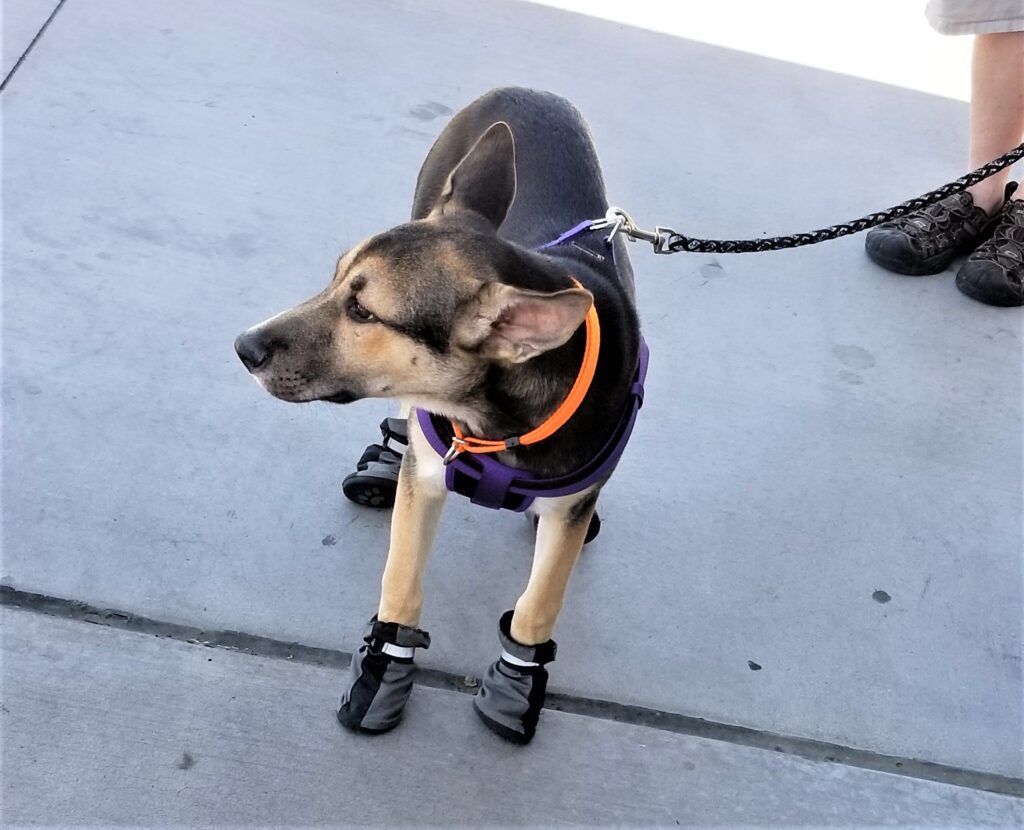
Winter walks are a challenge familiar to many farmers: hot cold, slippery roads, salted pavement. In these cases, the dog often stops unexpectedly, shakes his paws, or steps unsure. It is not a coincidence – the winter environment can quickly withstand the sensitive paws of dogs.
But is it really the solution to the dog shoes? Does it help with the salt and the cold? Let’s get to the point, simple and honest.
Why is salt and cold a problem?
The dogs’ paws are basically resistant, but they don’t protect against everything. In winter, several factors may cause irritation or pain:
– Passing salt and chemicals: The salt dries and bites the paw, can cause small cracks, and if the dog licks it, it irritates it even more.
– Frozen soil: The icy cold surface quickly freezes the pillows, which may be painful and increases the risk of injuries.
– Snow knots between toes: In dogs with longer hair, there are often small ice balls that are pointed at each step.
Together, they can easily take the joy of walking – both for the dog and for the master.
Are the dog shoes protected?
The answer is yes, very much – if you choose size and type correctly.
The dog shoes:
- blocks the paw from salt and chemicals,
- insulating against cold soil,
- prevents snow lumps,
- reduces the chance of minor injuries, uppercuts.
This is not just a matter of convenience: many dogs in the winter months have a spectacular improvement in feeling well-being when they can walk in protection.
How’s the good dog shoes? – Quick guide
Comfortable, well-functioning dog shoes:
1. Appropriate size
That’s the most important thing. Measure the length and width of the paw and choose with a scale table.
Too big shoes slide down, too small rub – none comfortable.
2. Waterproof but flexible material
Good shoes don’t get wet, yet they let them fit to the paw. So the dog can naturally move in it.
3. Good grip
It’s worth gold on a slippery sidewalk. Safe feet make a big difference.
4. Stable fixation
Taper or tuber stem – the point is to stay up while walking.
What if the dog’s a stranger to shoes?
It’s perfectly normal. A lot of dogs move in the first few minutes, or keep their feet strange. But after a few times, they get used to the shoes being comfortable.
Tip: First at home, give him a short time, reward him, then gradually take him out for a walk.
Balm or shoes? When do you choose?
The paws are also very useful: moisturize, relieve irritation and provide sufficient protection in mild cold.
Balsam: light winter, less salt, shorter walks
Shoe: strong frost, many salted roads, longer walks
Balsam + shoes: Sensitive paws for dogs with the strongest protection
Is it worth investing in dog shoes?
If your dog shakes his paws often in winter, pulls his legs, or walks on salted pavement a lot, then dog shoes can be real help – not only from a comfort perspective, but also healthily.
The goal is simple: comfortable, safe walk at all times.
What if your dog is cute in his little winter set? That’s just an extra pleasure.