
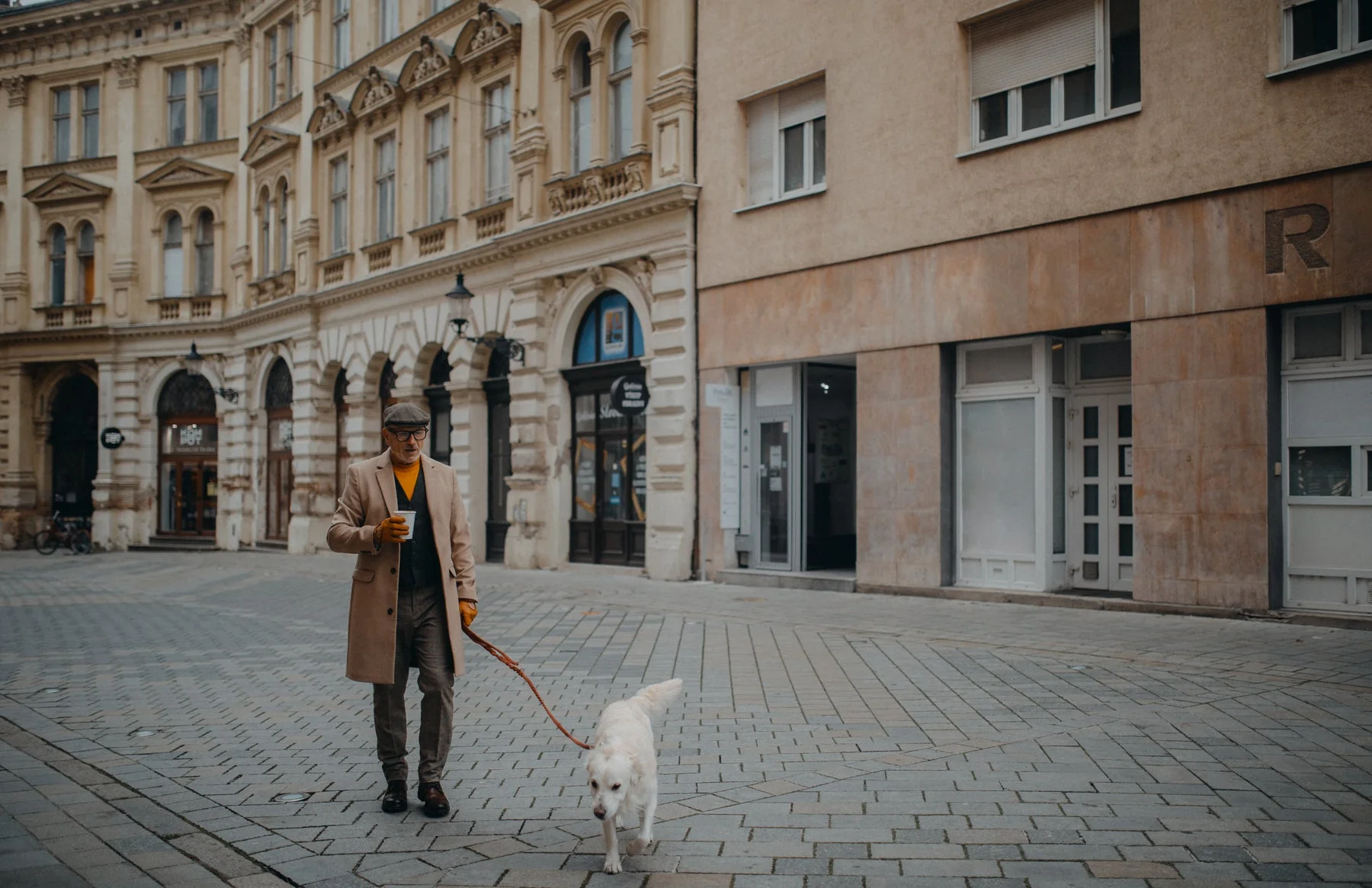
Dog walking is part of dog owners’ daily routine – yet there are surprisingly many national laws and municipal regulations that many people either don’t know about or don’t take seriously. These rules aren’t detailed for no reason: their aim is to protect the safety of dogs, owners and our environment. We’ve gathered the most important information so you can enjoy your walks together calmly and in accordance with the rules.
Why are the rules important?
Dog walking isn’t just about meeting a dog’s need for exercise; it’s also a social responsibility. If you follow the rules, you won’t just avoid fines — you’ll also help keep public spaces clean and support safe coexistence. Owners have a duty to familiarise themselves with the regulations that apply where they live and those in places they intend to take their dog.
The rules help prevent conflicts with other people and animals, and reduce the risk of accidents — which is especially important in urban areas.
Lead: almost always compulsory
One of the most important rules is that dogs must be kept on a lead in public spaces. Usually only designated dog exercise areas are exceptions.
Many people think a well-trained or small dog can walk off lead — but that’s not true. The rule applies to every dog, regardless of size or behaviour.
Newer guidance also recommends the length of the lead: in urban settings a shorter lead (roughly 1–1.5 metres) is ideal, as it lets you keep proper control of your dog.
Cleaning up: basic, not optional
It may seem obvious, but one of the most common offences is failing to pick up dog faeces.
The law is clear that the owner must clean up after their dog and dispose of the waste appropriately (for example in designated bins).
This is not only a hygiene issue but also a matter of respect for others. Furthermore, breaking the rule can result in a fine.
Muzzle and control
In certain cases — for example with larger breeds or dogs considered potentially dangerous — the use of a muzzle may be compulsory. This is not a punishment for the dog but a safety measure.
Even more important: the dog must always be under your supervision. It is not enough to „just be there” — you must be able to react immediately if the dog behaves aggressively or a dangerous situation arises.
Health obligations
The rules for dog walking don’t stop at the lead. To be able to take your dog out on public land at all, several basic conditions must be met:
- mandatory vaccinations
- microchip
- vaccination booklet if required
Lack of these is not only against the rules but can have serious consequences, such as fines or problems during an inspection.
Dog walking in forests and natural areas
Many people enjoy hiking with their dog — which is a great activity, but there are rules here too. In protected natural areas, a lead is often required, even if the dog is well trained.
The reason is simple: to protect wildlife. A dog running free can easily disturb the local wildlife or even put itself at risk.
Who can walk the dog?
Few people know, but it’s regulated who may take a dog for a walk. The law states that only a person capable of controlling the dog may do so.
This means, for example, that it may not be safe to entrust a large, strong dog to a young child.
What penalties can you expect?
Breaking the rules is not only unpleasant but can also cost you money. The most common reasons for fines are:
- walking without a lead
- failing to pick up dog faeces
- inadequate supervision
- missing vaccinations or microchip
The amounts of penalties vary and can be significant — which is why it’s best to know the rules in advance.
What does responsible dog walking mean?
Following the rules is only the foundation. A responsible owner does more than that:
- pays attention to their dog’s signals
- avoids confrontations
- respects others (children, older people and other dogs)
- ensures the dog is physically and mentally exercised
A well-socialised dog that is kept under control is not only happier but also far more acceptable to those around it.
Summary
Dog walking is much more than a daily routine: it’s a responsibility. If you follow the basic principles — lead, supervision, cleanliness — you’ve already done a lot to make shared walks enjoyable for everyone.
And remember: the rules aren’t against you; they’re for you — and for your dog.