
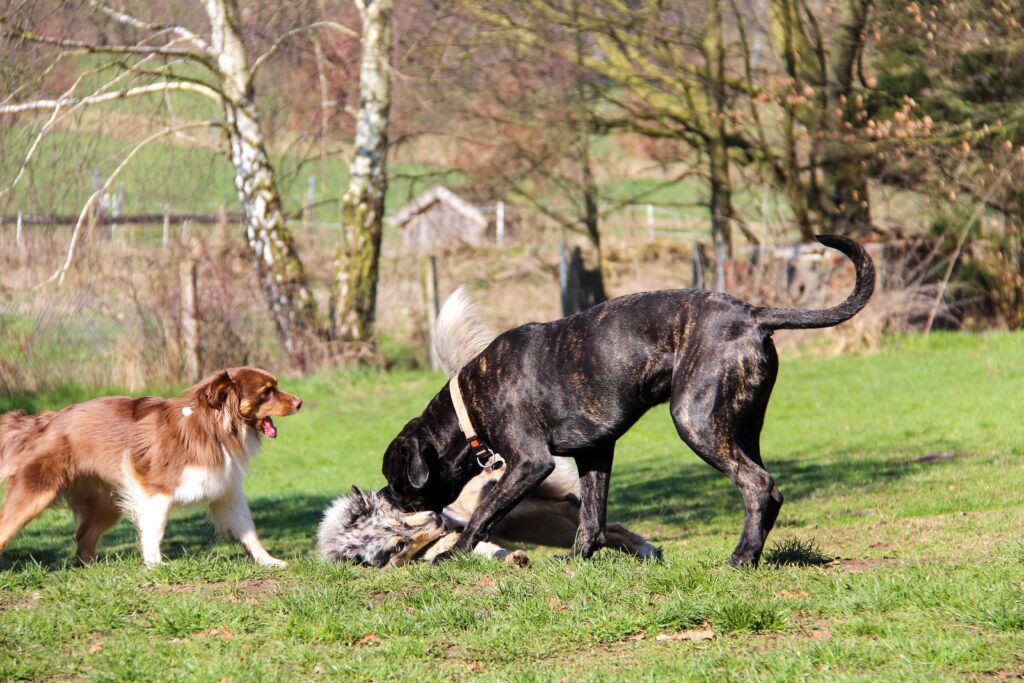
Dogs don’t communicate with words, yet they keep talking to us. Their posture, their ears, their tail movements, their eyes or even the tiny mimic signs all carry messages. For conscious farmers, knowledge of dogs’ body language is not only an interesting but a fundamental tool for harmonious coexistence.
For Brizlo, responsible animal husbandry also means learning to read our dog’s signals. The more we understand him, the safer and more balanced our relationship will be.
The tail is not just a sign of joy
A lot of people think that if a dog washes his tail, he’s probably happy. Reality is more subtle than that. The movement of the tail indicates excitement, but not necessarily positive.
-
Easy, medium-tall kissing: friendly, open state.
-
High-held, fast, tight kissing: increased excitement, whether dominance or tension.
-
Tail drawnfear, uncertainty.
-
Bold tail: vigilance, potential conflict situation.
The tail itself does not give a full picture – it is always worth interpreting with full posture.
Ears and eyes – direction of attention
The position of the ears says a lot about the dog’s emotional state. Forecast ears indicate interest and attention. Ears that have been struck back, they often show fear or submission.
Eye contact is also crucial. A calm, soft look means trust and balance. However, rigid long-lasting staring may be a sign of challenge or tension, especially among foreign dogs.
If the dog turns his head, looks past you or blinks, it’s often called a reconciliation sign: he says he doesn’t want any conflict.
Holding – confidence or uncertainty?
The whole posture of the dog tells me the most about how you feel.
-
Soft, slightly wavy motion: calm, balanced state.
-
Hard, tense body: state of standby, uncertainty or aggression.
-
Crushed body, low posturefear or submission.
-
Turn to the side, show abdomen: trust or surrender.
It is important to distinguish between true trust and surrender from fear. The context – location, presence of another dog, history – always counts.
Small signs with big meaning
Dogs use a lot of subtle signals that are easy to ignore.
-
Lip licking, yawn in stress: voltage relief signal.
-
Slow moves, turn: Peaceful gesture.
-
Raise Paw: uncertainty or concentration.
-
Inspiration in cold weatherIt could be a sign of stress.
These signals are often used as a pre-emptive warning before a dog responds more strongly. If we spot them in time, we can prevent conflicts.
Game or serious situation?
The interpretation of body language among dogs is particularly important. The call for a game – when the dog’s front legs are lowered and the back stays up – is a clear sign: “It’s just a game.” In such cases, movements are flexible, excessive, often role-changing.
However, if the body is rigid, the movement is measured, the look is fixed and the growling is deeper, it is no longer playful communication.
As a farmer, it is worth paying attention to these differences, especially in dogs or new acquaintances.
The host’s role in communication
Dogs aren’t just communicating with each other, they’re communicating with us. Taking into account signs of fear or stress may lead to a long-term loss of confidence.
For example, if the dog turns away, steps back or tense in a situation, it is worth giving him space. Coercion, for example, forced caress or approach in a scary situation for a person, may make contact worse.
In Brizlo’s philosophy, equipment supports this secure communication. A well-fitting harness, a comfortable collar or a suitable leash will help walk not as a source of tension but as a shared experience. Physical comfort also affects the dog’s behaviour directly.
Understanding creates security
Knowledge of dog body language makes it easier not only for everyday coexistence, but also for accidents and misunderstandings. A growling, a turning or a pulled tail is not “bad behavior,” it’s communication.
The more conscious we look at these signs, the stronger our trust becomes. The dog can’t say words that he’s insecure, excited or happy – but his body is always honest.
The real relationship begins when we not only talk to him, but understand what he’s saying.